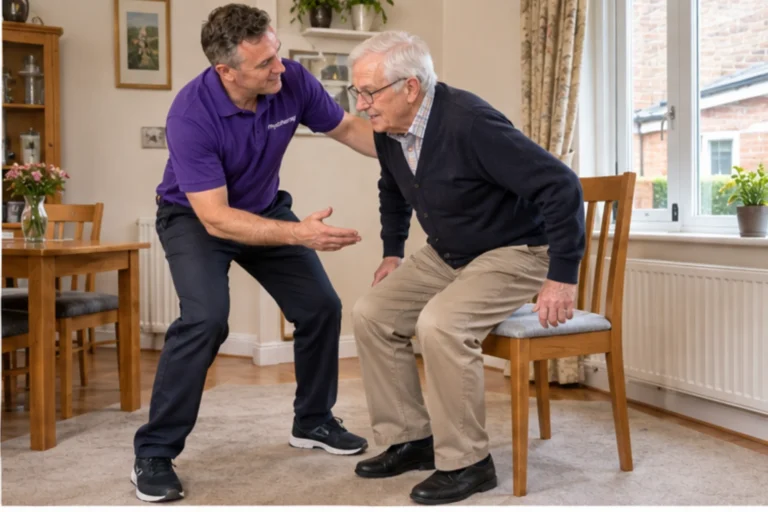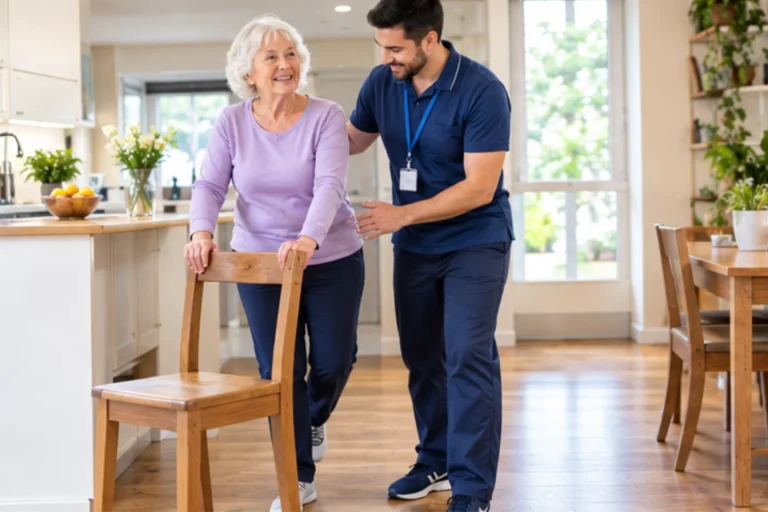
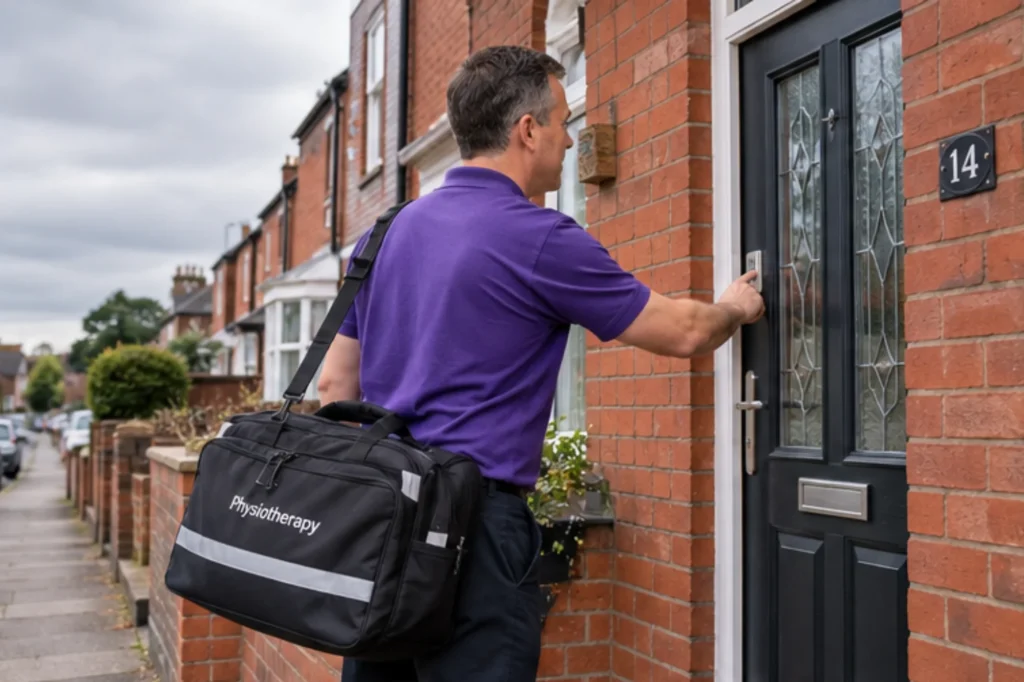
Home physiotherapy in Leeds provides professional rehabilitation and physiotherapy treatment in the comfort of your own home. Instead of travelling to a clinic, a qualified physiotherapist comes to you, assesses your needs and develops a treatment plan around your goals, mobility and everyday routine.
For people recovering from surgery, managing a long-term condition, experiencing mobility difficulties or simply finding it difficult to travel, a physiotherapy home visit can provide a practical and personalised alternative to traditional clinic-based treatment.
At Physio Assist Ltd, we provide mobile physiotherapy services across Leeds and West Yorkshire, led by M. Rashid Khan, Chartered Physiotherapist.
What Is Home Physiotherapy?
Home physiotherapy, sometimes called mobile physiotherapy or community physiotherapy, involves a qualified physiotherapist visiting you at home instead of you travelling to a clinic.
The assessment and treatment take place in your normal environment. This can be particularly useful when your symptoms or mobility difficulties affect everyday activities such as:
- Walking around your home
- Getting in and out of a chair
- Using stairs
- Getting in and out of bed
- Moving around the kitchen
- Getting dressed
- Using the bathroom safely
- Getting in and out of a car
A home visit also allows physiotherapy to be considered in the context of your actual surroundings rather than only within a clinical treatment room.
Who Can Benefit From Physiotherapy at Home?
Home physiotherapy can be suitable for people of different ages and with a wide range of movement and rehabilitation needs.
It may be particularly helpful for people who:
- Have difficulty travelling to a physiotherapy clinic
- Are recovering after surgery
- Have recently returned home following a hospital stay
- Have reduced strength or mobility
- Have balance difficulties
- Have experienced a fall
- Are living with a neurological condition
- Have persistent muscle or joint problems
- Need rehabilitation within their everyday environment
- Live in a care home or require community-based physiotherapy
Physiotherapy treatment should always be tailored to the individual’s assessment, condition, abilities and goals.
What Happens During a Home Physiotherapy Appointment?
Your first appointment will generally begin with an assessment.
1. Understanding Your Situation
Your physiotherapist will discuss your symptoms, medical history, current abilities and what you would like to achieve from treatment.
Depending on your situation, this may include discussing:
- Pain or discomfort
- Mobility
- Strength
- Balance
- Previous injuries
- Recent surgery
- Falls
- Daily activities
- Work or sporting requirements
- Your rehabilitation goals
2. Physical Assessment
Your physiotherapist may assess areas such as:
- Movement
- Muscle strength
- Joint mobility
- Balance
- Walking
- Functional movement
- Transfers
- Coordination
- Posture
The assessment will depend on your individual needs.
3. Personalised Treatment
Following the assessment, your physiotherapist can explain the findings and discuss appropriate treatment options.
Treatment may include:
- Therapeutic exercises
- Mobility exercises
- Strengthening exercises
- Balance exercises
- Movement retraining
- Manual therapy where clinically appropriate
- Advice and education
- Functional rehabilitation
- Home exercise programmes
The aim is not simply to treat a symptom but to help you improve movement and function in ways that are relevant to your everyday life.
Why Choose Physiotherapy at Home?
There are several practical advantages to having physiotherapy delivered at home.
Convenience
You do not need to arrange transport to a clinic or spend time travelling and waiting for an appointment.
The physiotherapist comes to you.
Treatment in a Familiar Environment
Your home is where many everyday movement challenges actually occur.
For example, your physiotherapist may be able to assess how you manage:
- Stairs
- Chairs
- Beds
- Walking routes
- Transfers
- Household movement
This can make rehabilitation more relevant to your daily routine.
Support for People With Reduced Mobility
For someone who finds travelling difficult, getting to a clinic can itself become a major challenge.
A home visit removes much of that logistical difficulty.
Personalised Rehabilitation
Your treatment plan can be built around your individual goals rather than following a standard programme.
Home Physiotherapy for Older Adults
Older adults may benefit from physiotherapy at home when they experience reduced mobility, weakness, balance problems or difficulty maintaining independence.
Physiotherapy can focus on practical goals such as:
- Walking more confidently
- Improving leg strength
- Practising safe transfers
- Improving balance
- Building confidence after a fall
- Maintaining independence
- Improving mobility around the home
The NHS recommends that older adults remain physically active and undertake activities that improve strength, balance and flexibility.
Home Physiotherapy After Surgery
Rehabilitation after surgery can involve gradually rebuilding strength, mobility and confidence.
Depending on the operation and your individual circumstances, physiotherapy may support recovery following procedures such as:
- Hip replacement
- Knee replacement
- Shoulder surgery
- Other orthopaedic procedures
- Hospitalisation or prolonged periods of reduced mobility
For example, NHS guidance for hip replacement recovery highlights the importance of following physiotherapy advice and completing recommended exercises during recovery.
Home Physiotherapy for Neurological Conditions
People living with neurological conditions may experience difficulties with movement, strength, balance or coordination.
Depending on the individual’s needs, physiotherapy may form part of rehabilitation for conditions such as:
- Stroke
- Parkinson’s disease
- Multiple sclerosis
- Spinal cord conditions
- Other neurological conditions
Treatment is individualised because neurological conditions can affect people in very different ways.
What Should You Wear for a Home Physiotherapy Appointment?
Wear comfortable clothing that allows the physiotherapist to assess the relevant area of your body and observe your movement.
For example:
- Comfortable trousers or shorts for lower-limb problems
- A loose-fitting top for shoulder or upper-limb problems
- Supportive footwear if walking and balance are being assessed
You do not normally need specialist equipment or a dedicated treatment room.
How Much Space Is Needed?
You do not need a large house or dedicated exercise room.
Your physiotherapist can work within the space available and adapt exercises to your environment.
Depending on your treatment plan, useful areas may include:
- A living room
- Bedroom
- Hallway
- Garden
- Stairs
- Other suitable areas around the home
How Often Will I Need Physiotherapy?
There is no single number of appointments that is suitable for everyone.
The recommended frequency depends on factors such as:
- Your condition
- Your rehabilitation goals
- Your current mobility
- Your response to treatment
- Your ability to complete exercises independently
- Your overall health and circumstances
Your physiotherapist can discuss an appropriate treatment plan after assessment.
Is Home Physiotherapy Suitable for You?
A home visit may be worth considering if travelling to a clinic is difficult or if you would benefit from rehabilitation focused on everyday activities.
It may be particularly useful if you are:
- Recovering from surgery
- Experiencing reduced mobility
- Worried about falling
- Living with a neurological condition
- Managing persistent muscle or joint problems
- Recovering after a hospital stay
- Supporting an older relative
Home Physiotherapy in Leeds and West Yorkshire
Physio Assist Ltd provides mobile physiotherapy designed around the individual.
Led by M. Rashid Khan, Chartered Physiotherapist, our service focuses on providing professional physiotherapy in the comfort of your own home.
We serve Leeds and West Yorkshire, helping patients work towards improved mobility, strength, confidence and independence.
Frequently Asked Questions
Do I need a GP referral for private physiotherapy?
Private physiotherapy can often be accessed without a GP referral. However, individual circumstances and insurance requirements can vary, so it is sensible to check with your insurer where applicable.
Can a physiotherapist visit me at home?
Yes. Home physiotherapy is specifically designed to provide assessment and rehabilitation in your home or another appropriate community setting.
Can physiotherapy help after surgery?
Physiotherapy is commonly used as part of rehabilitation following surgery. The appropriate treatment depends on the type of surgery, your recovery stage and your individual clinical needs.
Can family members or carers be involved?
Where appropriate, family members and carers can be involved in rehabilitation and can learn how to support safe movement and exercises between appointments.
What areas does Physio Assist Ltd cover?
Physio Assist Ltd provides home physiotherapy across Leeds and West Yorkshire. Contact the team to discuss your location and requirements.
Book a Home Physiotherapy Visit in Leeds
If you or a family member would benefit from physiotherapy at home, Physio Assist Ltd can provide personalised rehabilitation in a familiar environment.
Physio Assist Ltd
63 Carmoor Avenue, Leeds, West Yorkshire
Phone: +44 7888 143718
Email: info@physioassistltd.com
Book a home visit or contact us to discuss your physiotherapy needs.
Keep reading