Falls can have a significant effect on an older person’s confidence, mobility and independence. However, getting older does not mean that falls are unavoidable.
A combination of appropriate physical activity, strength and balance training, safer surroundings and professional assessment can help address factors that may contribute to falls.
Falls prevention physiotherapy can be particularly useful for older adults who have already fallen, feel unsteady when walking or have noticed a decline in strength and mobility.
At Physio Assist Ltd, we provide home physiotherapy across Leeds and West Yorkshire, helping older adults work towards safer and more confident movement in their everyday environment.
Why Do Older People Fall?
Falls can happen for many different reasons. There is often not one single cause.
Factors that may contribute to falls include:
- Reduced muscle strength
- Poor balance
- Reduced mobility
- Previous falls
- Arthritis or joint problems
- Neurological conditions
- Vision problems
- Medication-related factors
- Environmental hazards
- Difficulty using stairs
- Unsafe footwear
- Reduced confidence when walking
The NHS identifies factors including muscle weakness, mobility or balance problems, vision and hearing difficulties, dementia and some medication side effects among possible contributors to falls.
Why Is Falls Prevention Important?
A fall can affect more than physical health.
After a fall, some people become worried about falling again. This may lead them to reduce their activity.
Less activity can then contribute to:
- Reduced muscle strength
- Reduced balance
- Reduced confidence
- Less independence
- Greater difficulty completing everyday activities
This can create a cycle in which fear of falling results in less movement and further loss of physical ability.
Physiotherapy can help break this cycle by creating an appropriate programme based on the individual’s current abilities and goals.
How Can Physiotherapy Help Prevent Falls?
A physiotherapy assessment can look at movement and functional factors that may contribute to falls.
Strength Assessment
Weakness in the legs can make everyday activities more difficult.
For example, reduced leg strength can affect your ability to:
- Stand from a chair
- Climb stairs
- Walk safely
- Get out of bed
- Step over obstacles
- Recover your balance
Strengthening exercises can be selected and progressed according to the person’s ability.
Balance Assessment
Balance can be affected by age, illness, injury, neurological conditions and reduced activity.
A physiotherapist may assess balance during activities such as:
- Standing
- Turning
- Walking
- Changing direction
- Reaching
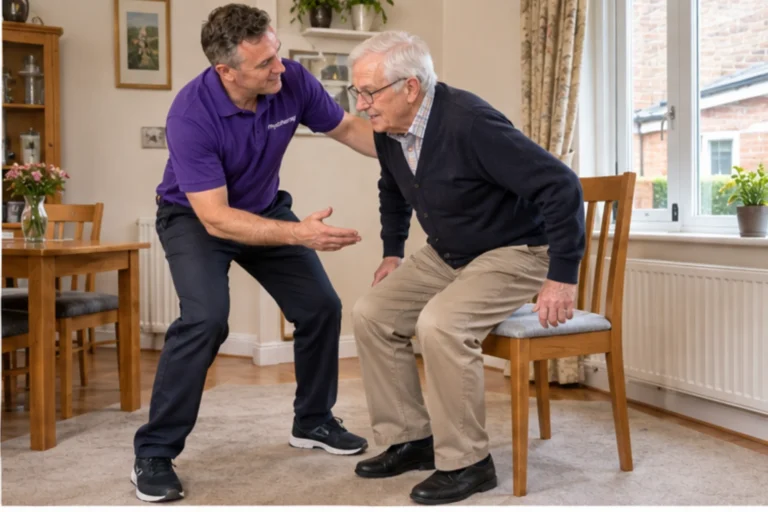
- Getting up from a chair
The exercises prescribed will depend on the individual’s assessment.
Walking Assessment
Walking difficulties can increase the risk of trips and falls.
A physiotherapist may look at:
- Walking speed
- Step length
- Foot clearance
- Turning
- Use of walking aids
- Confidence
- Ability to manage different surfaces
The purpose is to identify practical ways to improve safe mobility.
Falls Prevention Exercises
Exercise is an important part of falls prevention.
The NHS recommends activities that improve strength and balance for older adults, with strength and balance activities recommended on at least two days each week.
Examples of exercises that may be incorporated into an appropriately designed programme include:
Sit-to-Stand
Practising standing up and sitting down can help develop functional leg strength.
Heel Raises
Heel raises can be used to work the calf muscles and may form part of a wider strengthening programme.
Supported Balance Exercises
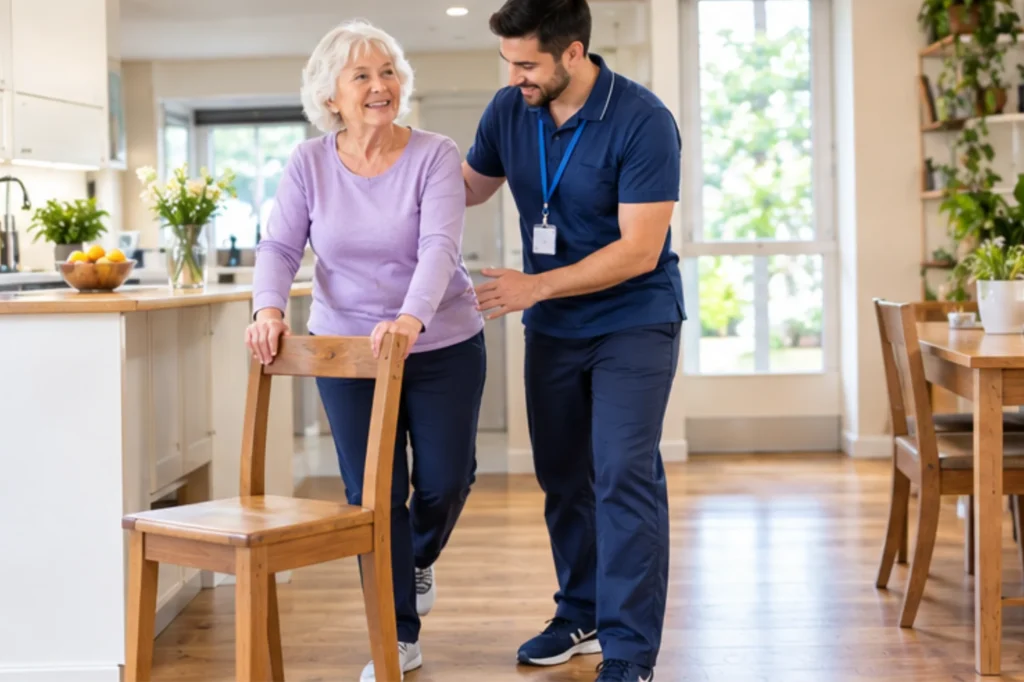
Balance exercises can be performed with appropriate support where required.
Walking Practice
Walking can be incorporated into a rehabilitation programme where it is safe and appropriate.
Important: exercises are not suitable for everyone in the same form. A physiotherapist should consider an individual’s health, balance, strength and fall risk when developing an exercise programme.
Making Your Home Safer
Falls prevention is not only about exercise.
The home environment can also play an important role.
Check for Common Hazards
Look around your home for:
- Loose rugs
- Trailing electrical cables
- Clutter
- Poor lighting
- Wet or slippery floors
- Unstable furniture
- Obstacles on stairs
- Unsuitable footwear
NHS guidance recommends addressing household hazards such as clutter, trailing wires and poor lighting as part of falls prevention.
What About Walking Sticks and Frames?
Walking aids can be useful for some people, but the correct aid and correct use are important.
A physiotherapist or another appropriate healthcare professional can assess whether a walking aid may be suitable and can provide guidance on safe use.
If you already use a walking stick or frame, make sure it is in good condition and appropriate for you.
Falls Prevention After a Previous Fall
If you have already fallen, it is worth considering what contributed to the fall.
Questions to consider include:
- Where did the fall happen?
- Were you turning or reaching?
- Were you rushing?
- Were you feeling dizzy or unwell?
- Were you using a walking aid?
- Was the floor slippery?
- Was the area poorly lit?
- Had your mobility recently changed?
A professional assessment can help identify appropriate next steps.
The NHS advises people who are worried about falls to seek appropriate support and highlights strength and balance training as part of falls prevention.
Falls Prevention for People Living With Parkinson’s Disease or Stroke
Neurological conditions can affect balance, coordination, strength and walking.
People living with conditions such as:
- Parkinson’s disease
- Stroke
- Multiple sclerosis
- Other neurological conditions
may benefit from individually tailored physiotherapy.
Treatment can focus on movement, strength, balance, transfers, walking and functional activities depending on the person’s needs.
How Home Physiotherapy Can Help
For someone with mobility difficulties, travelling to a clinic can itself be challenging.
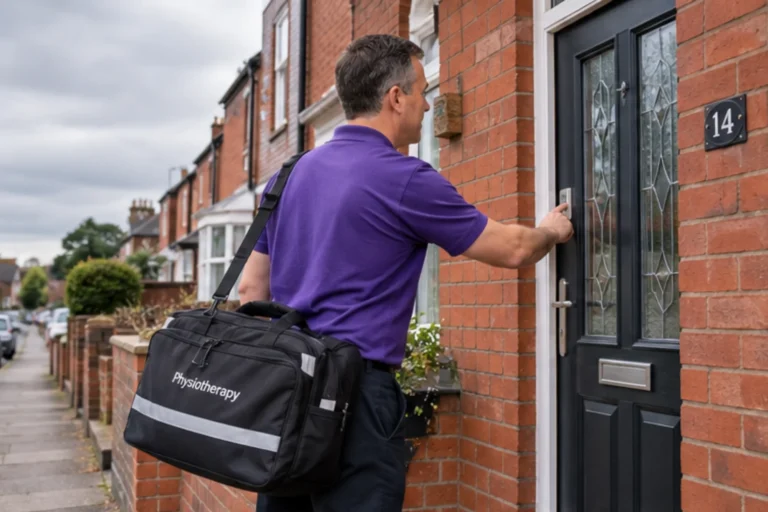
A home physiotherapy assessment allows rehabilitation to take place within the person’s usual environment.
This can make it possible to consider real-life challenges such as:
- Getting out of bed
- Moving between rooms
- Using stairs
- Getting into the bathroom
- Standing from the sofa
- Walking to the front door
- Moving around the kitchen
This approach can help make rehabilitation practical and relevant to everyday life.
When Should You Consider Falls Prevention Physiotherapy?
Consider discussing physiotherapy if you or a family member:
- Has experienced one or more falls
- Has had near-falls
- Feels unsteady when walking
- Has become less active
- Has difficulty getting up from a chair
- Has reduced leg strength
- Is increasingly dependent on others
- Has lost confidence walking outdoors
- Is recovering from an injury
- Has a neurological condition affecting mobility
A Simple Falls Prevention Checklist
| Area | What to Check |
|---|---|
| Strength | Can you stand from a chair safely? |
| Balance | Do you feel steady while standing and turning? |
| Walking | Are you walking safely and confidently? |
| Footwear | Are your shoes supportive and secure? |
| Lighting | Are stairs, hallways and rooms well lit? |
| Flooring | Are there loose rugs or slippery surfaces? |
| Clutter | Are walkways clear? |
| Walking aids | Are they appropriate and in good condition? |
| Confidence | Are you avoiding activities because you fear falling? |
When to Seek Medical Help After a Fall
Not every fall requires emergency treatment, but some symptoms require urgent medical attention.
Seek urgent medical help if a fall results in serious injury or concerning symptoms.
If someone has suffered a significant injury, has severe pain, appears seriously unwell or has symptoms suggesting a medical emergency, seek appropriate emergency medical assistance.
Falls can sometimes be related to an underlying medical issue, so repeated or unexplained falls should also be discussed with an appropriate healthcare professional.
Falls Prevention Physiotherapy in Leeds
Physio Assist Ltd provides falls prevention physiotherapy in Leeds and West Yorkshire.
Our home-visit approach allows physiotherapy to take place in the environment where everyday mobility actually happens.
Treatment can be tailored around:
- Strength
- Balance
- Walking
- Mobility
- Confidence
- Independence
- Individual rehabilitation goals
Frequently Asked Questions
Can physiotherapy reduce the risk of falls?
Physiotherapy can address factors such as strength, balance, mobility and functional movement that may contribute to falls. An individual assessment is important to determine appropriate treatment.
Is falls prevention physiotherapy suitable for older adults?
Yes. Falls prevention physiotherapy can be appropriate for older adults who have experienced falls, feel unsteady or have concerns about their strength and mobility.
Can a physiotherapist assess my home?
A home visit allows the physiotherapist to observe movement within the home and may help identify practical challenges. Any recommendations will depend on the individual assessment.
Can I have falls prevention physiotherapy after a stroke?
Physiotherapy may form part of rehabilitation for people following stroke, depending on their individual condition and rehabilitation needs.
Can family members or carers be involved?
Yes. With the patient’s agreement, carers and relatives can be involved in understanding exercises, safe mobility and ways to support rehabilitation.
Book a Falls Prevention Assessment in Leeds
If you or a loved one is worried about falling, reduced mobility or declining confidence when walking, Physio Assist Ltd can provide home-based physiotherapy across Leeds and West Yorkshire.
Phone: +44 7888 143718
Email: info@physioassistltd.com
Contact Physio Assist Ltd to discuss whether a home physiotherapy assessment may be appropriate for you.
Keep reading