Hip and knee replacement surgery can help people regain mobility and improve their ability to manage everyday activities. However, surgery is only one part of the recovery process.
Physiotherapy after hip or knee replacement can support the gradual return of strength, mobility, confidence and functional independence.
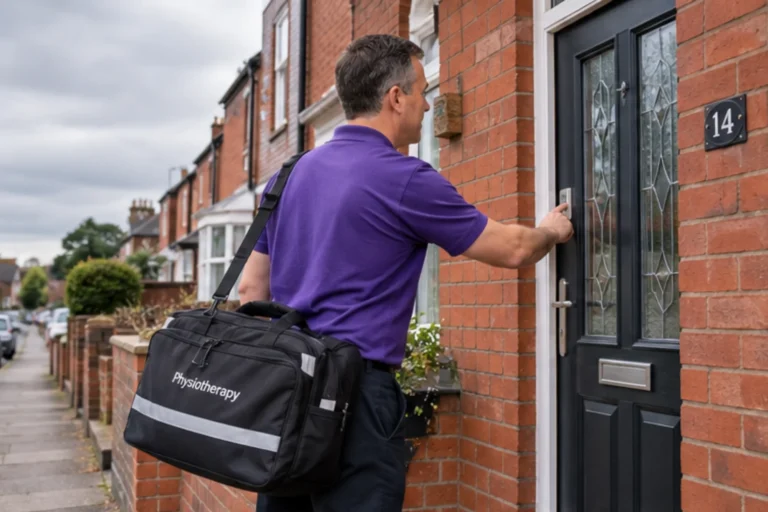
For people who find travelling difficult after surgery, home physiotherapy can provide rehabilitation within a familiar environment.
At Physio Assist Ltd, we provide home physiotherapy across Leeds and West Yorkshire, helping patients work towards their individual rehabilitation goals following surgery.
Why Is Physiotherapy Important After Joint Replacement?
Following joint replacement surgery, the body needs time to recover.
You may experience:
- Pain or discomfort
- Swelling
- Muscle weakness
- Reduced joint movement
- Difficulty walking
- Reduced confidence
- Difficulty using stairs
- Difficulty getting in and out of chairs
- Changes to your normal daily routine
Physiotherapy can help you gradually work on movement, strength and functional activities.
NHS guidance explains that recovery after hip replacement can take several months and recommends following the exercise and activity advice provided by your healthcare team.
Physiotherapy After Hip Replacement
Hip replacement rehabilitation varies between individuals.
Your recovery can be influenced by:
- Your age
- General health
- Pre-operative mobility
- Muscle strength
- The type of surgery
- Your surgeon’s instructions
- Your rehabilitation programme
- Other health conditions
The NHS notes that people may initially need walking aids and physiotherapy support after hip replacement surgery, with exercises helping long-term strength and movement.
Physiotherapy After Knee Replacement
Knee replacement rehabilitation focuses on gradually improving movement, strength and function.
Depending on your individual circumstances, physiotherapy may focus on:
- Knee movement
- Leg strength
- Walking
- Transfers
- Stair practice
- Functional activities
- Confidence with movement
- Gradual return to everyday activities
The exact programme should be determined according to your surgery, clinical assessment and instructions from your healthcare team.
What Can a Home Physiotherapy Assessment Include?
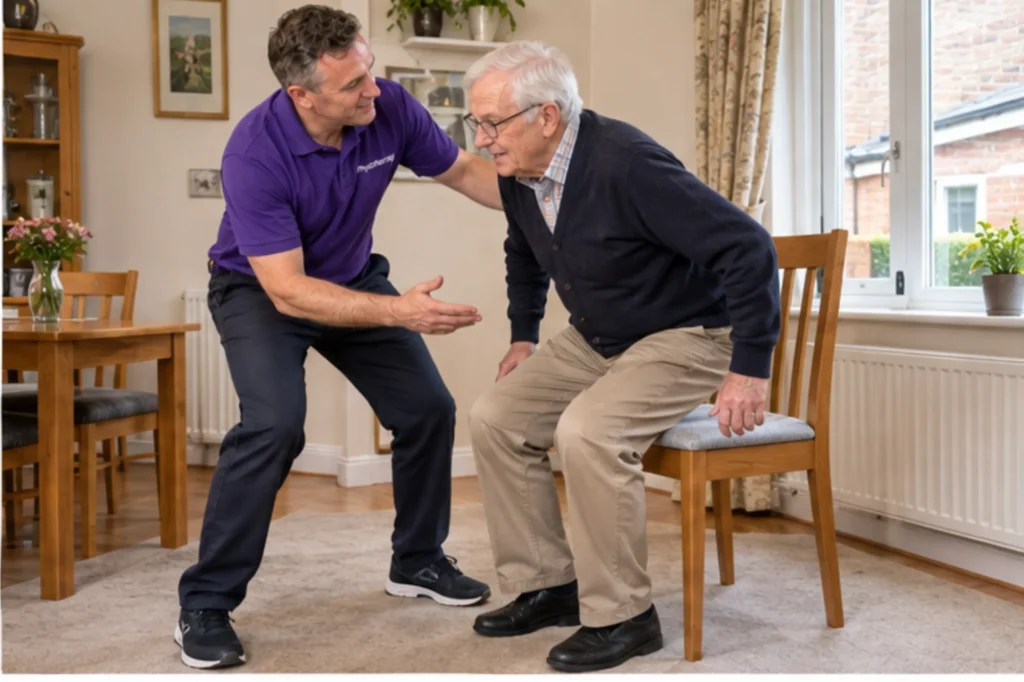
A home visit allows your physiotherapist to assess how you are managing in your actual living environment.
Walking
Your physiotherapist may assess how you move around your home and whether you are using your walking aid safely.
Transfers
This can include observing how you:
- Get out of bed
- Sit down
- Stand from a chair
- Move between surfaces
Stairs
If stairs are part of your daily routine, they may be considered during functional rehabilitation where appropriate.
Strength
Your physiotherapist can assess relevant muscle strength and identify areas that may need progressive strengthening.
Mobility
Joint movement and functional mobility can be considered as part of your rehabilitation.
What Does Recovery at Home Look Like?
Recovery is gradual.
Rather than expecting to return immediately to your previous level of activity, rehabilitation generally involves making manageable progress over time.
Your programme may include:
- Recommended exercises
- Walking practice
- Strengthening
- Mobility exercises
- Functional practice
- Advice on pacing
- Education about safe movement
Your physiotherapist can help you understand how to progress appropriately.
The Importance of Following Your Surgical Team’s Advice
Every operation and patient is different.
Your surgeon, hospital physiotherapist or other healthcare professional may give you specific instructions regarding:
- Weight-bearing
- Movement restrictions
- Exercises
- Wound care
- Walking aids
- Driving
- Returning to work
- Physical activity
These instructions should take priority.
A private physiotherapist should work alongside, rather than replace, the advice provided by your surgical and medical team.
How Home Physiotherapy Can Make Rehabilitation Practical
One of the benefits of home rehabilitation is that treatment can focus on activities you actually need to perform.
For example, your goals may include:
- Walking from your bedroom to the kitchen
- Getting safely into the shower
- Managing stairs
- Standing from your favourite chair
- Preparing meals
- Walking outside
- Getting back to work
- Returning to hobbies
Instead of focusing only on isolated exercises, rehabilitation can be connected to your daily activities.
Managing Activity During Recovery
It can be tempting to do too much on a good day and then experience increased discomfort afterwards.
A gradual approach is often more manageable.
Useful Principles
- Follow your clinical team’s advice
- Complete recommended exercises
- Increase activity gradually
- Take appropriate rest periods
- Use walking aids as advised
- Avoid activities your surgical team has told you to avoid
- Monitor how your body responds to increased activity
- Ask your physiotherapist if you are unsure about progression
NHS guidance after hip replacement recommends regular walking within comfort and following physiotherapy exercises, while also identifying activities that should be avoided during early recovery.
A Typical Rehabilitation Journey
Recovery is different for everyone, but rehabilitation can broadly involve several stages.
| Stage | Main Focus |
|---|---|
| Early recovery | Safe movement, transfers and appropriate walking |
| Building mobility | Increasing walking and functional movement |
| Strengthening | Improving strength around the operated limb |
| Functional rehabilitation | Stairs, daily activities and confidence |
| Progression | Increasing activity according to individual goals |
| Long-term maintenance | Maintaining strength, mobility and independence |
These stages are not a fixed timetable. Your individual recovery should guide progression.
How Can Physiotherapy Help With Confidence?
Physical recovery and confidence often develop together.
After surgery, it is understandable to feel cautious about moving.
A personalised rehabilitation programme can help you gradually practise movements in a controlled way.
This may include:
- Standing
- Walking
- Turning
- Stairs
- Getting in and out of chairs
- Everyday household activities
As your strength and movement improve, confidence may also improve.
When Should You Contact Your Healthcare Team?
After surgery, it is important to know when symptoms require medical advice.
Contact your healthcare team if you have concerns about your recovery or experience symptoms that are unusual, severe or worsening.
Seek urgent medical assistance for symptoms that could indicate a serious complication.
Your hospital or surgical team should provide specific information about warning signs following your procedure.
Can Home Physiotherapy Help After Hospital Discharge?
Yes, home physiotherapy may be useful for people who require continued rehabilitation after returning home.
This can be particularly relevant if you:
- Have difficulty travelling
- Live alone
- Have reduced mobility
- Need help progressing exercises
- Are struggling with stairs
- Have difficulty with everyday activities
- Need rehabilitation within your home environment
Preparing for Your Home Physiotherapy Appointment
Before your appointment, it can be useful to have:
- Your hospital discharge information
- Your surgeon’s instructions
- Any physiotherapy exercises provided by the hospital
- Details of medications where relevant
- Your walking aid
- Comfortable clothing
- Any questions you would like to discuss
If possible, make sure the physiotherapist can safely access the areas of the home that are relevant to your rehabilitation.
Frequently Asked Questions
How soon after hip replacement can I have physiotherapy?
The appropriate timing depends on your surgery, discharge instructions and individual clinical circumstances. Follow the advice provided by your surgical and hospital physiotherapy team.
How long does recovery after hip replacement take?
Recovery varies significantly between individuals. The NHS notes that it may take several months to recover following hip replacement.
Do I need physiotherapy after knee replacement?
Your surgical team will provide rehabilitation advice following your operation. Physiotherapy can be an important part of restoring movement, strength and function after joint replacement.
Can a physiotherapist visit me at home after surgery?
Yes. Home physiotherapy is designed to bring rehabilitation to the patient and can be particularly useful when travelling is difficult after surgery.
Can physiotherapy help me use stairs again?
Where appropriate, stair practice can form part of functional rehabilitation. Your physiotherapist will consider your strength, balance, surgical instructions and safety before progressing this activity.
Can I exercise at home after joint replacement?
Your hospital or physiotherapist should provide appropriate exercises for your stage of recovery. Do not begin new exercises or significantly increase activity without considering your individual clinical circumstances.
Hip and Knee Replacement Rehabilitation in Leeds
Physio Assist Ltd provides post-surgery physiotherapy at home across Leeds and West Yorkshire.
Led by M. Rashid Khan, Chartered Physiotherapist, our home-visit approach allows rehabilitation to take place in the environment where you need to regain your independence.
Whether your goal is to improve walking, rebuild strength, manage everyday activities or regain confidence after surgery, your physiotherapy programme can be tailored around your individual needs.
Book Home Physiotherapy After Surgery
If you or a family member is recovering from hip replacement, knee replacement or another orthopaedic procedure, contact Physio Assist Ltd to discuss home physiotherapy.
Physio Assist Ltd
63 Carmoor Avenue, Leeds, West Yorkshire
Phone: +44 7888 143718
Email: info@physioassistltd.com
Contact Physio Assist Ltd today to discuss a home physiotherapy appointment in Leeds or West Yorkshire.
Keep reading